Quick answer
- A double lobe piercing adds a second hole above or beside your first lobe piercing.
- Your piercer will space it based on your lobe size, often leaving room for a third.
- Lobes typically heal in about 6–8 weeks, though some take longer.
- Go smaller as you move up: a statement first hole, a petite stud or huggie in the second.
A double lobe piercing is the friendliest first step into a curated ear. It adds a second hole to your lobe, which instantly gives you room to mix sizes, metals and shapes. Here is how to plan the spacing, choose earrings for your second and third holes, and why we think a little mismatch is the best part.
What is a double lobe piercing?
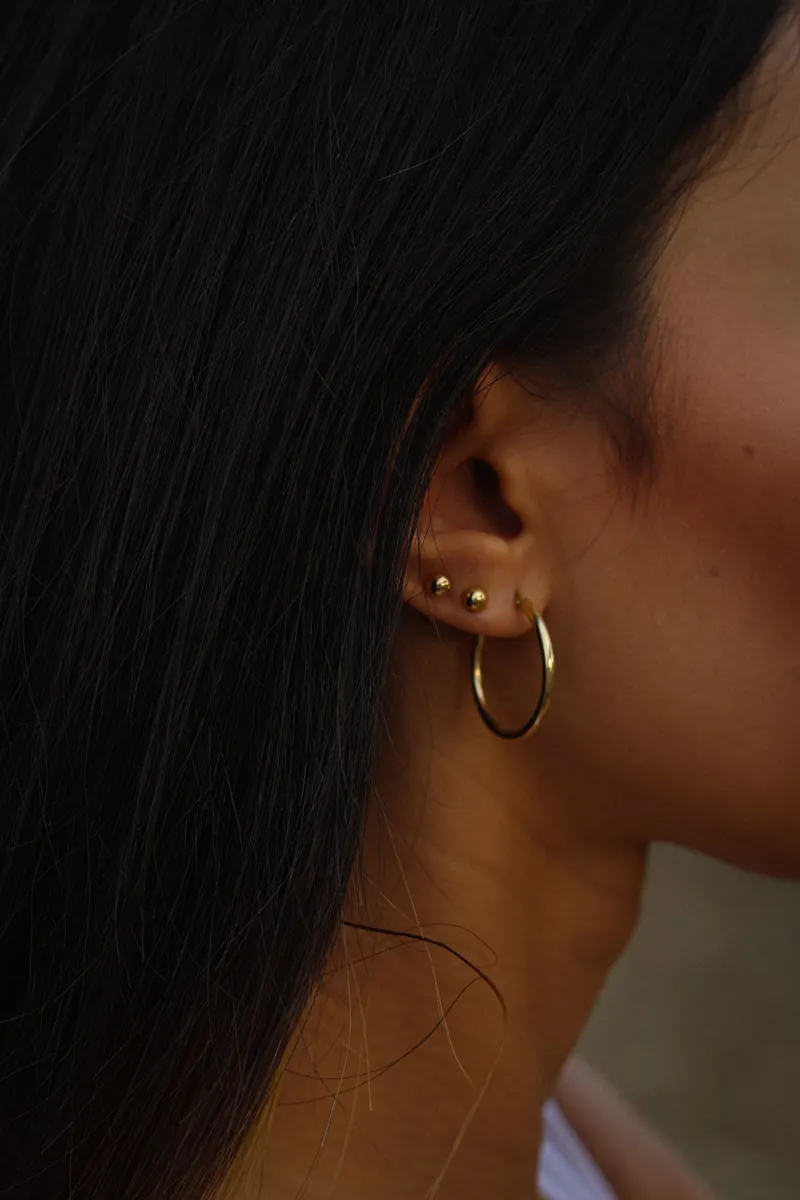
Your first lobe piercing usually sits near the center of your lobe. A double lobe piercing places a second hole above it, often angled slightly up and toward the back of the ear following the lobe's natural curve. Add one more and you have a triple lobe.
Because it goes through soft tissue rather than cartilage, it is one of the quickest and least painful piercings to heal. Most people describe it as a quick pinch.
Spacing your second hole
Placement makes or breaks the look. A good piercer will mark your ear and let you check it in the mirror before anything happens.
- Leave room for jewelry: the holes need to be far enough apart that studs in both do not overlap and a hoop in the first does not crowd the second.
- Follow your anatomy: on smaller lobes, a second hole may sit close to the top of the lobe, leaving no space for a third.
- Plan ahead: if you might want a third hole someday, say so now so your piercer can space the second accordingly.
- Consider symmetry, or not: you can mirror both ears or pierce just one for an intentionally asymmetrical look.
Choose a professional piercer who uses a needle. Piercing guns are still common for lobes, but a needle is gentler, more precise, and lets your piercer place the hole exactly where you agreed.
Healing a double lobe piercing
Lobe piercings typically heal in about 6–8 weeks, though some take a few months, especially if you sleep on them or they get snagged. Start with a simple stud in implant-grade titanium or 14k+ solid gold, and leave it in for the full healing time.
Rinse with sterile saline, keep hair products away, and avoid twisting the jewelry. If you notice heat, spreading redness, thick discolored discharge or fever, see a doctor. If your earrings ever pick up an odd odor once healed, our guide on why earrings smell explains what is going on.
Pairing earrings for your second and third holes
A simple rule makes stacked lobes look polished: go smaller as you go up. Your first hole can carry a statement, and each higher hole gets a bit more delicate.
| Hole | Great options | Typical size |
|---|---|---|
| First lobe | Hoops, drops, larger studs | Anything you love |
| Second lobe | Small studs, huggies, mini hoops | 3–5mm studs or 8–10mm huggies |
| Third lobe | Tiny studs, flat-backs, dots | 2–3mm studs |
To compare those sizes at a glance, use our earring size tool or the 5mm earrings actual size guide. Most lobe earrings are 20g or 18g, so standard pairs fit your second hole once it has healed.
Pairing ideas to try
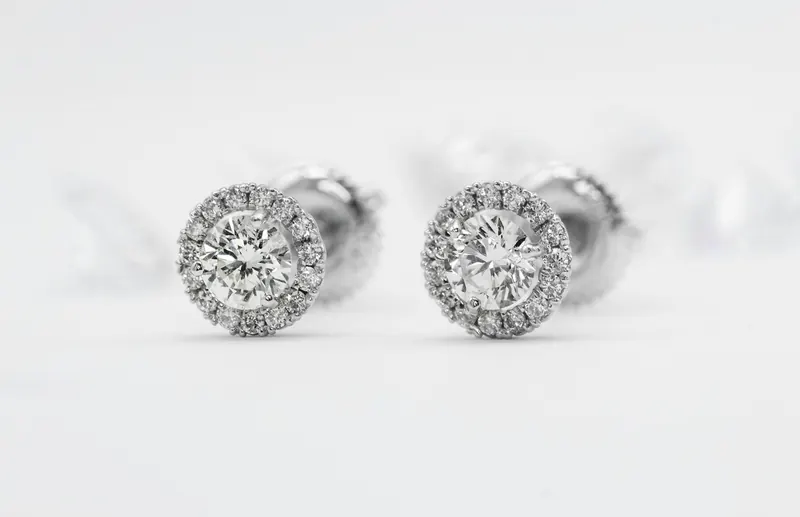
- Hoop and stud: a gold hoop in the first hole, a small diamond stud above.
- Double huggies: two huggies in graduated sizes for a stacked-ring look.
- Drop and dot: a dangle below with a single tiny ball stud above.
- Pearl and gold: a pearl stud in the first, a polished gold huggie in the second.
Matching vs mismatched: celebrate the mismatch
Here is where we get a little opinionated. Your ears do not need to match, and honestly, they often look better when they do not. Our name is an Italian idiom for something charmingly out of place, and that is the spirit of a great stacked ear.
Try a crescent moon in one ear and a star in the other, a hoop on the left and a cluster on the right, or a single double lobe piercing on just one side. The trick to mismatched ears looking intentional is to keep one thread in common: the same metal, a similar scale, or a shared color. Without that thread, a stack can look accidental rather than curated; with it, every odd pairing reads as a choice.
- Same metal, different shapes: all gold, but different motifs.
- Same shape, different sizes: hearts in three sizes across two ears.
- Odd one out: a fully matched stack with one surprise piece.
Where to go next
Once your lobes are healed, many people move up into cartilage. A small helix stud or tragus gem makes a natural next step; browse our cute cartilage earrings for ideas that pair with a double lobe.
Frequently asked questions
How long does a double lobe piercing take to heal?
Lobes typically heal in about 6–8 weeks, though some take a few months. Keep your starter studs in for the full healing period.
How far apart should a double lobe piercing be?
There is no single measurement; your piercer will space it based on your lobe size and the jewelry you want to wear. Say upfront if you might want a third hole.
Can I get a double lobe piercing on just one ear?
Absolutely. A single-sided second hole is a popular way to create an intentionally asymmetrical, curated look.
What earrings are best for a second hole?
Smaller pieces like 3–5mm studs, huggies or mini hoops work best, so they do not crowd your first hole.