Quick answer
- The smell comes from sebum, dead skin cells and sweat building up in and around the piercing.
- Bacteria break that buildup down, creating the cheesy odor nicknamed ear cheese.
- Wash your lobes and clean your earrings regularly with mild soap and water.
- Pain, swelling, heat or yellow or green discharge can mean infection: see a doctor.
You take out a pair of studs, catch a whiff, and wonder why do my earrings smell like old cheese. You're not alone, and it's almost always harmless. The odor comes from natural skin oils and dead cells collecting inside the piercing channel, where bacteria break them down.
The fix is usually a better cleaning habit, not new ears. Here's what's going on, how to get rid of the smell, and the signs that mean something else needs attention.
What causes the smell
A healed piercing is a tunnel of skin. Like the rest of your skin, it sheds cells and produces sebum, the oily substance that keeps skin supple. With an earring sitting in the tunnel all day, that material has nowhere to go.
- Sebum: skin oil that collects on the post and in the channel.
- Dead skin cells: shed constantly and trapped by the jewelry.
- Sweat, hair products and makeup: they add to the mix, especially on the back of the lobe.
- Bacteria: normal skin bacteria feed on the buildup and release smelly compounds.
The result is a pale, waxy, sometimes crumbly substance with a distinctive cheesy smell. Piercers and the internet have lovingly named it ear cheese. It's the same process that makes stretched lobes, navel rings and other body jewelry smell when they're not cleaned.
Why some earrings smell worse than others
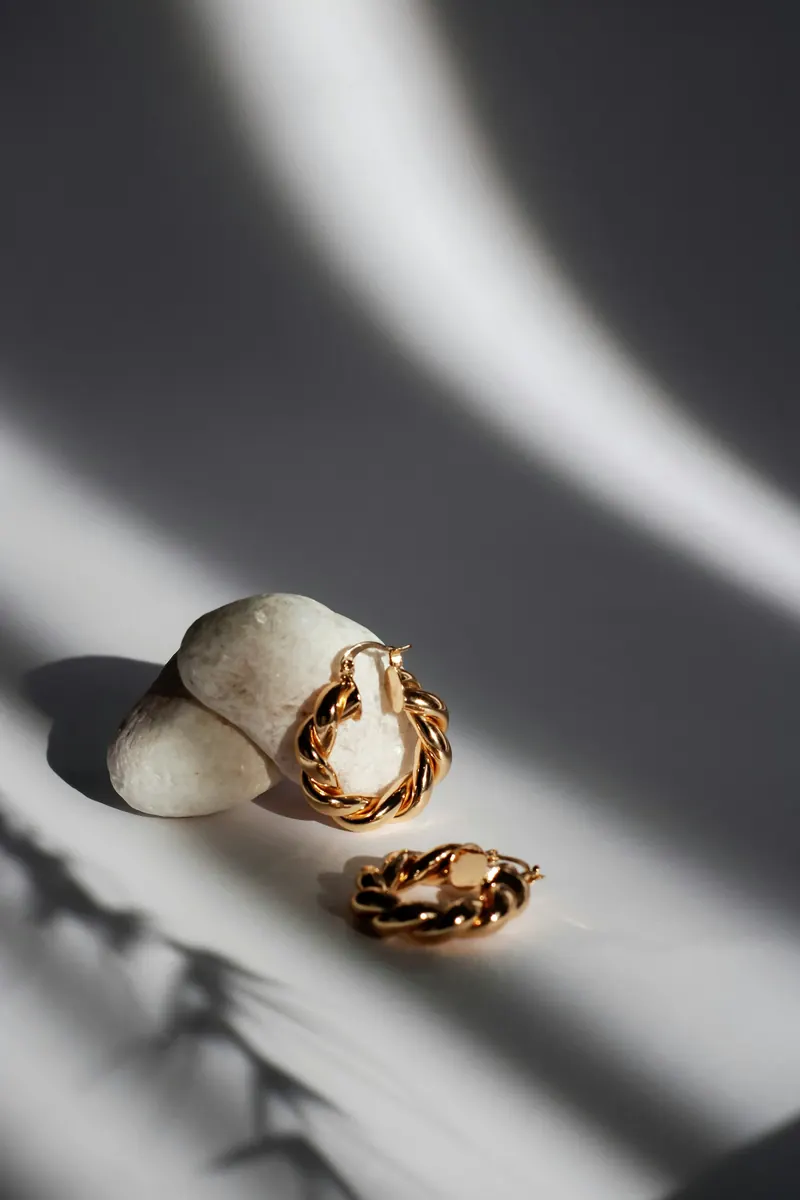
Some designs and materials trap more gunk. Butterfly backs, for instance, have tight little curls that catch skin cells, and hollow or textured pieces have crevices that hold onto residue. The twisted hoops pictured are lovely, but every ridge is a spot for buildup if they're never cleaned.
| Factor | Why it adds to odor |
|---|---|
| Butterfly and push backs | Tight curls trap skin and oil behind the lobe |
| Textured or hollow designs | Grooves hold residue that's hard to see |
| Sleeping in earrings | Longer wear time, more buildup, pillow sweat |
| Plated or porous materials | Worn plating and porous surfaces cling to grime |
| Not removing earrings for weeks | The channel never gets a rinse |
If backs seem to be the culprit, switching styles can help. Flat-back labrets and screw backs are easier to clean. See our guide to types of earring backs for the options.
How to stop your earrings from smelling
For healed piercings, a short routine a few times a week is usually enough.
- Remove the earrings with clean hands.
- Wash your lobes in the shower with a mild, fragrance-free soap, gently working lather around the front and back of the hole. Rinse well.
- Clean the jewelry in warm water with a drop of mild dish soap. Use a soft toothbrush on backs and textured areas.
- Dry everything thoroughly before you put the earrings back in.
- Wipe the posts with an alcohol wipe occasionally, if your metal and stones can handle it.
Give your ears an occasional night off, and avoid letting hair products or perfume settle on the lobe. Storing earrings clean and dry also helps; a ventilated holder or tray beats a sealed bag. Our earring holder guide has storage ideas.
Fresh piercings are different. Follow your piercer's aftercare, which typically means sterile saline spray and leaving the jewelry in place. Don't twist, remove or soak a healing piercing in soap.
When a smell means infection
Ear cheese is pale, waxy and painless. An infection looks and feels different, and it needs proper care.
- Increasing pain, throbbing or tenderness
- Redness or swelling that spreads
- The area feels hot to the touch
- Yellow, green or bloody discharge, often with a stronger foul smell
- Fever or feeling unwell
If you notice these, see a doctor promptly. Don't remove the jewelry on your own in a suspected infection unless a medical professional advises it, since the hole can close and trap the infection. Cartilage infections in particular should be checked quickly.
Why do my earrings smell even when I shower?
Water alone doesn't reach far into the channel while an earring is in place, and it doesn't dissolve oil well. Take the earrings out once in a while so the soap can actually reach the hole, then rinse thoroughly. Hair conditioner residue is a sneaky contributor, so rinse your ears last.
Could it be an allergy instead?
Itching, redness, flaky skin or a rash around the hole may point to a metal sensitivity, most often to nickel. Irritated skin can weep and add to the smell. Switching to implant-grade titanium, niobium or 14k+ solid gold often solves it.
If the reaction continues after you change metals, ask a doctor or dermatologist. And if you're building a new collection, it's worth knowing the main types of earrings and which ones come in skin-friendly metals.
Frequently asked questions
Is it normal for earring holes to smell?
Yes. A mild cheesy smell from built-up sebum and dead skin is common and harmless. Regular washing usually clears it up.
How often should I clean my earrings?
For healed piercings, clean everyday earrings once or twice a week and wash your lobes in the shower daily or every few days.
Why do my earring backs smell so bad?
Butterfly and push backs have tight curls that trap skin cells and oil. Scrub them with a soft brush and mild soap, or switch to flat or screw backs.
When should I see a doctor about a smelly piercing?
See a doctor if the smell comes with pain, spreading redness, heat, swelling, colored discharge or fever, which can signal infection.