Quick answer
- The helix is the outer rim of your upper ear cartilage; 16g (1.2mm) is the most common gauge.
- Start with a flat-back stud and wait until fully healed before switching to a hoop.
- Helix hoops are usually 8–10mm in inner diameter, depending on where the hole sits.
- Stick to implant-grade titanium or 14k+ solid gold, especially while healing.
Helix earrings are the jewelry you wear in the cartilage along the upper rim of your ear, and they are one of the easiest ways to make an ear look curated. The right choice depends on exactly where you are pierced, how healed you are, and how much movement your ear can handle. This guide covers placement, studs vs hoops, sizes and materials.
Helix vs forward helix vs double helix
These terms trip a lot of people up, so here is the quick version.
| Piercing | Where it sits | Typical starter jewelry |
|---|---|---|
| Helix | The outer rim of the upper ear, toward the back | Flat-back labret stud |
| Forward helix | The front rim, close to your face, above the tragus | Flat-back labret with a small top |
| Double helix | Two holes stacked on the outer rim | Two flat-back labrets |
| Triple helix | Three holes on the outer or forward rim | Three small labrets |
The forward helix sits in a tighter, more sheltered spot, so tops tend to be smaller. If that is the look you want, read our guide to the triple forward helix piercing. The standard outer helix has more room, which makes it the classic spot for hoops later on.
Studs vs hoops for helix earrings
For a fresh helix piercing, a stud is almost always the better choice. Specifically, a flat-back labret: a straight post with a flat disc on the back that sits comfortably against your ear, plus a decorative top on the front.
Hoops look effortless, but they move constantly. Every turn of your head, brush of hair or pillow contact rotates the ring through the channel, which irritates healing cartilage and can lead to bumps or a crooked angle. Most piercers suggest waiting until you are fully healed, often 6–12 months for a helix, before switching to a hoop.
Feeling healed is not the same as being healed. Ask your piercer to check before you change to a hoop, and have them do the first swap if the jewelry is tricky.
Helix earring sizes: gauge, length and diameter
Helix piercings are most commonly done at 16g (1.2mm). Some piercers use 18g (1.0mm), and a few go to 14g (1.6mm). Regular lobe earrings are usually thinner at 20g or 18g, so a standard earring from a department store may not fit or may sit loosely. Our article on what gauge regular earrings are explains the difference.
Stud post length
Your first labret will be a little long to allow for swelling, often around 8mm. After a few weeks your piercer downsizes it, usually to around 6–6.5mm, so it sits snugly and does not snag.
Hoop diameter
Hoop size is measured across the inside of the ring. The right one depends on how far your hole sits from the edge of your ear.
- 8mm: a snug, hugging look for holes close to the rim.
- 9mm: a common middle ground that fits many helix placements.
- 10mm: a little looser, good for holes placed farther in.
- 6–7mm: usually only for forward helix or very small ears.
To see what 8mm looks like next to other sizes, try our earring size tool, or check the 8mm earrings actual size guide.
Materials that are safe for the helix
Cartilage is less forgiving than your lobe, so metal quality matters a lot.
- Implant-grade titanium (ASTM F-136): lightweight, nickel-free and the top pick for fresh piercings.
- 14k or 18k solid gold: beautiful and body-safe when it is solid, not plated, and nickel-free.
- Niobium: a good hypoallergenic option for healed piercings, often in fun anodized colors.
- Avoid: plated, mystery-metal or sterling silver jewelry in a healing helix. Silver can tarnish and irritate open tissue.
Styling ideas for helix earrings
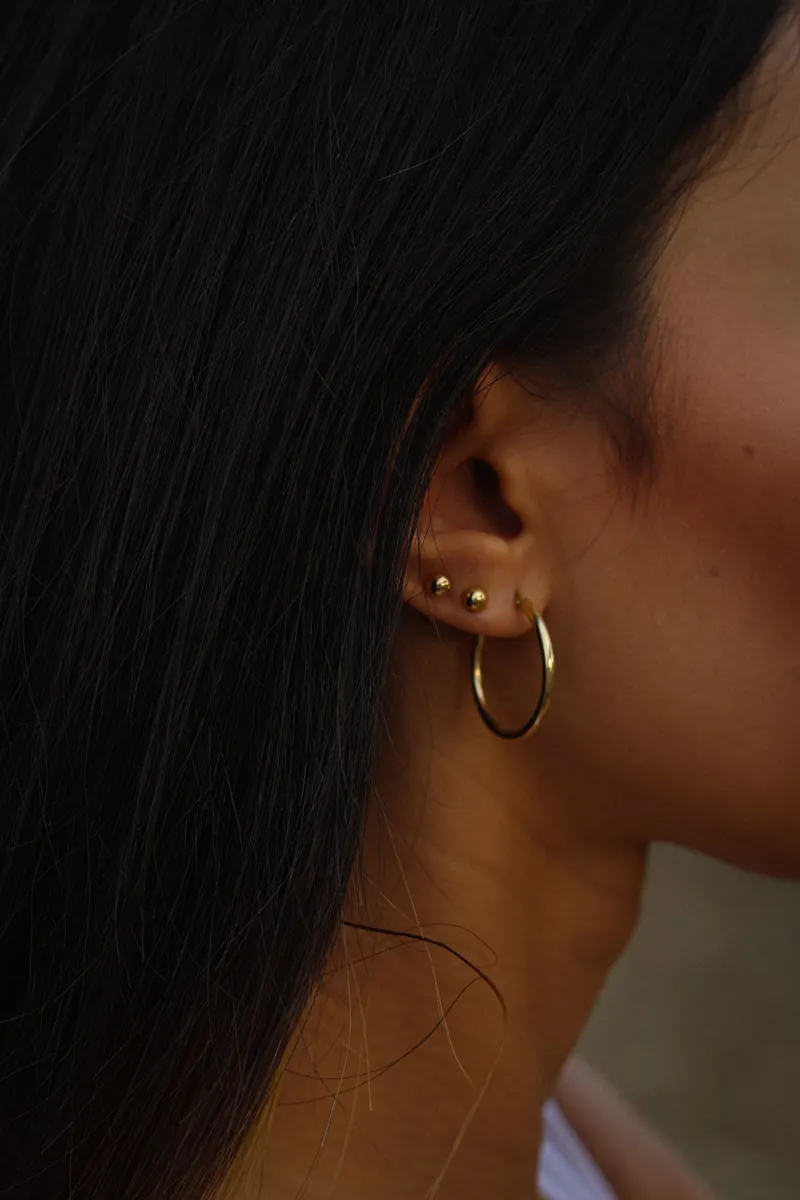
Once you are healed, the helix becomes a playground. A single plain gold hoop pairs with almost anything. A trio of tiny studs up the rim reads as delicate and modern. Mixing a hoop on one side with a gem stud on the other is the kind of charmingly mismatched ear we love.
Try balancing your helix with your lobes. If your lobes are busy, keep the helix simple; if your lobes are minimal, let the helix carry a statement like a chain connector or clicker with a dangle. For more small, upper-ear ideas, browse our roundup of cute cartilage earrings.
Caring for your helix
Rinse with sterile saline, keep hair products away, and try not to sleep on the piercing. A travel pillow with a hole in the middle helps if you are a side sleeper. If you notice spreading redness, heat, thick discharge or fever, see a doctor rather than waiting it out.
Frequently asked questions
What size are helix earrings?
Most helix piercings are 16g (1.2mm). Healed helix hoops are typically 8–10mm in inner diameter, depending on how far the hole is from the rim.
When can I put a hoop in my helix?
Wait until your helix is fully healed, often 6–12 months, and ask your piercer to confirm. Hoops move more and can irritate a healing piercing.
Can I wear regular earrings in my helix?
Often not well. Regular earrings are usually 20g or 18g with butterfly backs, while helix jewelry is typically 16g with a flat back.
What is the best metal for helix earrings?
Implant-grade titanium or 14k+ solid gold. Both are body-safe and far less likely to cause irritation than plated metals.